Cracking the Feed: How Asian Creators Learned to Speak the Algorithm's Native Language
Something weird is happening in your For You Page, your Shorts feed, your Reels tab. You might not have clocked it yet, but there's a pattern forming — a specific kind of pacing, a certain visual rhythm, a storytelling hook that hits differently from everything else scrolling past. Chances are, that content was made in Tokyo, Seoul, or Jakarta. And chances are, it performed way better than it had any right to on platforms that were built by Silicon Valley, for Silicon Valley.
This isn't an accident. A growing number of Asian creators have quietly reverse-engineered the recommendation systems behind TikTok, YouTube Shorts, and Instagram Reels — and they're doing it using a toolkit that's centuries older than any machine learning model.
Retention Is a Story Problem
Here's the core insight that a lot of Western creators miss: algorithmic performance is fundamentally a storytelling problem. Platforms measure watch time, loop rate, completion rate, and re-watch behavior. Every one of those metrics is downstream from one question — does this video make you want to keep watching?
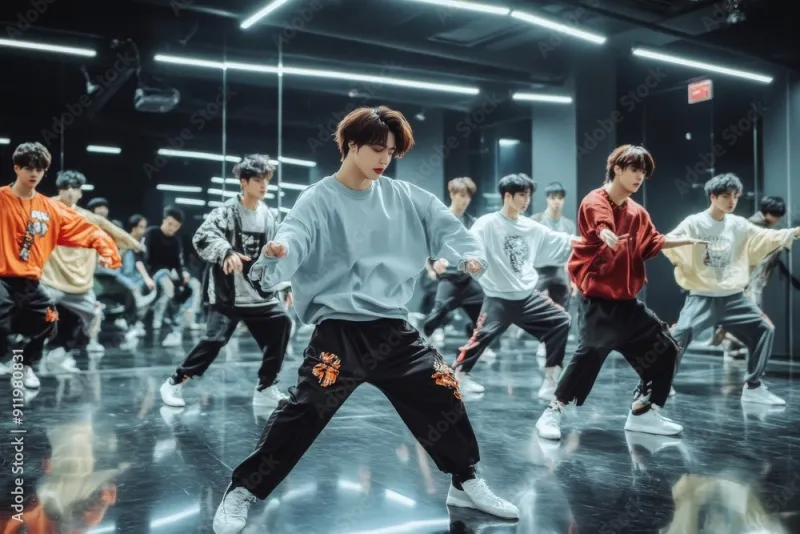
Asian creators, particularly those coming out of Japan and South Korea, grew up inside storytelling traditions that are obsessed with that exact question. Manga artists spend careers perfecting the panel-to-panel transition — the way your eye moves from one image to the next without ever wanting to stop. Anime editors build sequences around emotional micro-peaks, tiny dopamine hits spaced so precisely that you barely notice you've watched four episodes. K-drama directors shoot scenes in layers, using visual callbacks and slow-burn reveals that make even a 90-second clip feel like it has genuine stakes.
When those instincts get applied to short-form video? The algorithm doesn't know what hit it. It just knows people aren't swiping away.
The Hook Is a Panel, Not a Pitch
Spend an hour watching high-performing Japanese or Korean creator content and you'll notice something about the first two seconds. Where a lot of Western creators open with a verbal hook — literally saying "wait until you see this" or "I can't believe this happened" — Asian creators tend to open with a visual composition that functions more like a manga splash page.
The frame is deliberately incomplete. Something is slightly off-center, partially obscured, or mid-motion. Your brain registers that the image hasn't resolved yet, and you wait for it to. That waiting is watch time. That waiting is algorithmic gold.
Japanese creator and illustrator Yuki Tanabe, who built a following of over 2 million across platforms primarily through art process videos, describes it almost like a visual question mark. "The first frame should make someone feel like they walked into a room right before something happens," she explained in a translated interview. "They have to stay to find out what."
This technique has deep roots in manga composition, where artists control the reader's information with surgical precision. Applied to a 30-second Reel, it becomes something platforms seem to reward heavily — because it works.
Pacing That Plays With Time
Another thing that stands out in high-performing Asian creator content is the relationship with time. Western short-form content often operates at a relentless pace — cut fast, move on, next thing. The implicit logic is that speed equals engagement. Keep it moving before they swipe.
But a significant chunk of the most-looped content coming out of Korea and Japan does the opposite. It breathes. There are deliberate pauses, slow zooms, moments where nothing is technically happening — and yet the video holds your attention completely.
This is K-drama cinematography logic applied to a vertical screen. Korean drama directors have long understood that silence and stillness, placed correctly, create emotional tension that dialogue can't. A pause before a reveal. A held shot after a reaction. Negative space that forces the viewer to lean in rather than check out.
Algorithms don't consciously reward emotional tension — but they do reward the behavior that emotional tension produces. People don't swipe during a held beat that feels loaded. They wait. And that waiting registers as retention.
Southeast Asia's Secret Weapon: Community-First Content
While Japan and Korea bring the aesthetic and structural sophistication, Southeast Asian creators — particularly from Indonesia, Thailand, and the Philippines — are contributing something else entirely: an instinctive understanding of how to build participatory content.
Creators in these markets have been operating in high-competition, low-resource environments for years, which pushed them toward formats that invite the audience into the content itself. Duet-friendly structures. Open-ended narratives that beg for response videos. Visual prompts that are almost explicitly designed to be remixed.
This is algorithmic savvy of a different kind. Platforms boost content that generates interaction — comments, stitches, duets, shares. Southeast Asian creators engineer that interaction into the content itself, not as an afterthought but as a structural feature. The video isn't complete until the audience responds to it. That's a loop the algorithm loves.
What This Says About the Machine
There's a bigger story underneath all of this, and it's one that people who study AI and recommendation systems are starting to pay attention to. For years, the assumption was that algorithmic platforms were culturally neutral — that they measured engagement signals and optimized for them without any inherent aesthetic bias. The data would sort it out.
But if creators trained in distinctly non-Western storytelling traditions are consistently outperforming on Western platforms, that raises some interesting questions. Either the algorithms are genuinely responding to storytelling quality in a way that transcends cultural origin — which would be remarkable — or the global user base of these platforms is more cross-culturally fluent than anyone expected, and content that draws on anime, manga, and K-drama traditions resonates with audiences who grew up consuming that content alongside American media.
Given how many Gen Z Americans grew up watching Naruto and binge-reading Webtoons on their phones, that second explanation might be more plausible than it sounds.
The Turf War Nobody's Talking About
Western creators aren't oblivious to what's happening. There's a growing cottage industry of YouTube essays and creator podcasts trying to decode why certain videos from overseas creators blow up without any of the conventional Western growth tactics — no aggressive CTR thumbnails, no shouted hooks, no trend-chasing in the caption.
Some creators are starting to borrow the techniques without fully understanding the cultural logic behind them. You see it in the slow zooms showing up in American lifestyle content, the deliberate pacing creeping into cooking videos, the incomplete first frames in fashion Reels. The aesthetic is migrating even when the source isn't acknowledged.
That's probably the clearest signal that something real is happening here. When creators start copying a style because it works, even without knowing why it works, the algorithm has already made its preference known.
The feed has a native language. It turns out that language has been spoken in Asia for a very long time.