Trainee Nation: How K-Pop's Grueling Boot Camp Model Is Quietly Rewiring the American Music Business
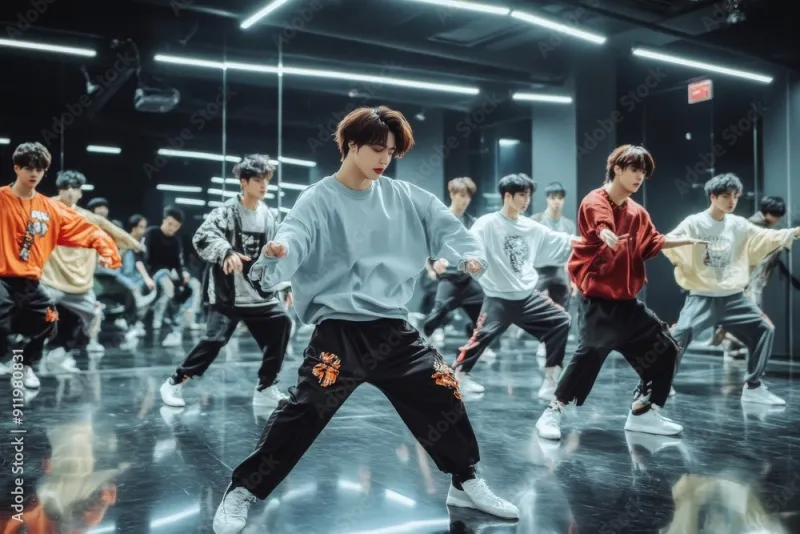
Photo: K-pop dance training studio rehearsal young performers, via as1.ftcdn.net
There's a moment in almost every K-pop documentary where a trainee — usually a teenager, usually exhausted — stares into the camera and says something like, "I've been preparing for this for six years." Six years. That's longer than most American artists spend on a full album cycle. And yet, for millions of fans watching those documentaries on YouTube or Weverse, that sentence isn't alarming. It's aspirational.
That shift in perception — from "that sounds brutal" to "that sounds like dedication" — might be the most quietly significant cultural import Korea has sent to the United States in the last decade.
What the Trainee System Actually Is (And Why It Works)
To understand why American industry insiders are suddenly paying attention, you have to understand what the K-pop trainee model actually does. It isn't just vocal lessons and dance practice. Companies like HYBE, SM Entertainment, and JYP run what amount to multi-year immersive development programs. Trainees live in company-managed housing, follow strict schedules, receive instruction in vocals, rap, dance, language, media training, and even fan interaction etiquette. Progress is evaluated regularly, and not everyone makes it to debut.
The result is a performer who, by the time they release a single, has already logged thousands of hours in front of mirrors, cameras, and instructors. They know how to move on stage, how to speak in interviews, how to manage parasocial relationships with fans. They're polished in a way that most American artists simply aren't at debut — because American artists typically aren't expected to be.
The traditional Western path to pop stardom is messier, more organic, and deeply tied to the mythology of the "discovered" talent. You get found at a county fair, you post a cover on TikTok, your demo lands on the right desk. There's romance in that randomness. But there's also a staggering dropout rate, and a whole lot of artists who never learned how to sustain a career after their initial moment.
The American Experiment
A few years ago, the idea of an American label running a formal trainee program would have seemed bizarre — almost dystopian. Now it's starting to happen, in different forms and at different scales.
Independent academies in Los Angeles and New York have started offering "K-pop style" training intensives, some of them pulling in coaches who trained at Korean agencies. These programs aren't cheap — we're talking hundreds to thousands of dollars for multi-week sessions — and they're filling up. The clientele isn't just Korean-American kids dreaming of Seoul. It's teenagers from Ohio, from Texas, from Florida, whose entire concept of what a pop star should be has been shaped by BTS, BLACKPINK, and aespa.
On the label side, things are more opaque, but the signals are there. Several mid-size American management companies have quietly restructured their artist development divisions to include longer pre-debut incubation periods. One prominent Los Angeles-based company — which works with several artists currently charting on pop radio — told Billboard last year that they'd started thinking about artist development "in phases, like a product launch," language that would have been considered cold and cynical five years ago but now reads as simply strategic.
Then there's the internet-native version: independent artists self-imposing trainee-style regimens, documenting the whole thing on TikTok and YouTube. The "idol training vlog" is now a legitimate content genre, with creators racking up millions of views just by showing their vocal warm-ups and choreography breakdowns.
The Friction Nobody Talks About Enough
Here's where it gets complicated. The K-pop trainee system didn't develop in a vacuum — it emerged from a specific cultural context that values collective discipline, institutional loyalty, and deferred gratification in ways that don't always map cleanly onto American individualism.
Former trainees from Korean agencies have spoken openly about the psychological weight of the system: the constant evaluation, the fear of being cut, the identity compression that comes from having your entire self-concept tied to a debut that may or may not happen. Some have described it as genuinely formative. Others have described it as damaging. Both things can be true.
When you import that framework into an American context — where labor protections are different, where therapy culture is more normalized, where the expectation of personal autonomy is baked into the cultural DNA — you create new friction points. American teenagers raised on the idea that their individuality is their greatest asset don't always respond well to being told to subordinate that individuality to a group concept.
There are also real questions about who benefits financially. Korean trainee contracts have drawn criticism for their length and terms. American adaptations of the model haven't necessarily fixed those issues — they've sometimes just repackaged them.
Why American Audiences Are Actually Into the "Made" Part
Maybe the most interesting thing about all of this is how American fans have responded. A generation ago, the term "manufactured pop star" was an insult — a way of dismissing artists like early Britney Spears or the Backstreet Boys as inauthentic, assembly-line products. Authenticity was the gold standard.
Something has shifted. Gen Z audiences, raised on reality TV, behind-the-scenes content, and parasocial relationships with creators who document everything, have developed a more nuanced relationship with the idea of construction. They don't necessarily want to believe that their favorite artist emerged fully formed from a garage in New Jersey. They want to see the work. They want the practice room footage, the pre-debut photos, the trainee-era interviews.
In that sense, the K-pop trainee system isn't just a talent development model — it's a content machine. And American audiences, whether they know it or not, are increasingly fluent in its language.
The idol factory is open for business. The application process is competitive. And the waiting list is longer than you'd think.