One Character to Rule Them All: How Asian Visual Design Rewrote the Grammar of Online Emotion
One Character to Rule Them All: How Asian Design Rewrote the Grammar of Online Emotion
Somewhere between the first time someone typed (´;ω;`) and the moment your iPhone keyboard started offering you a full menu of bubble tea emojis, something fundamental shifted in how Americans talk to each other online. It wasn't loud. There was no announcement. But the cultural infrastructure underneath digital communication quietly got rebuilt — and the blueprints came from Tokyo and Seoul.
The Limits of the Smiley Face
Western digital expression had a pretty modest starting point. A colon and a parenthesis. Maybe a semicolon if you were feeling cheeky. The logic was blunt and literal: map a facial expression onto punctuation, and you've captured an emotion. Job done.
Except it wasn't done. Not even close.
Anyone who's tried to text their way through a complicated friendship knows that a :) does almost no emotional heavy lifting. It can't carry irony. It can't signal that you're joking but also kind of serious. It definitely can't communicate the specific flavor of affectionate exasperation you feel when your best friend texts you at 2 AM about their latest situationship crisis.
Japan already knew this. Korea already knew this. And they'd spent decades building something better.
Kaomoji and the Architecture of Nuance
Kaomoji — literally "face characters" — emerged from Japanese internet culture in the 1980s and exploded across bulletin boards, early chat rooms, and eventually every corner of the digital world. Unlike their Western counterparts, kaomoji are read horizontally, which means they can incorporate an almost infinite range of emotional detail: ear position, body language, sweat drops, sparkles, little hands throwing up in despair.
(╥_╥) isn't just sad. It's specifically sad in a way that involves visible effort at containing tears.
( ̄▽ ̄)ノ isn't just a greeting. It's breezy, a little smug, and somehow warm at the same time.
This is the thing that Western punctuation-based emoticons simply couldn't do: convey relational context. Who you are to the person you're texting. The social register of the moment. Whether this is playful or sincere or both simultaneously. Kaomoji encoded all of that into a string of characters, and once you've used them, going back to :P feels like trying to paint a mural with a crayon stub.
When Silicon Valley Finally Caught Up
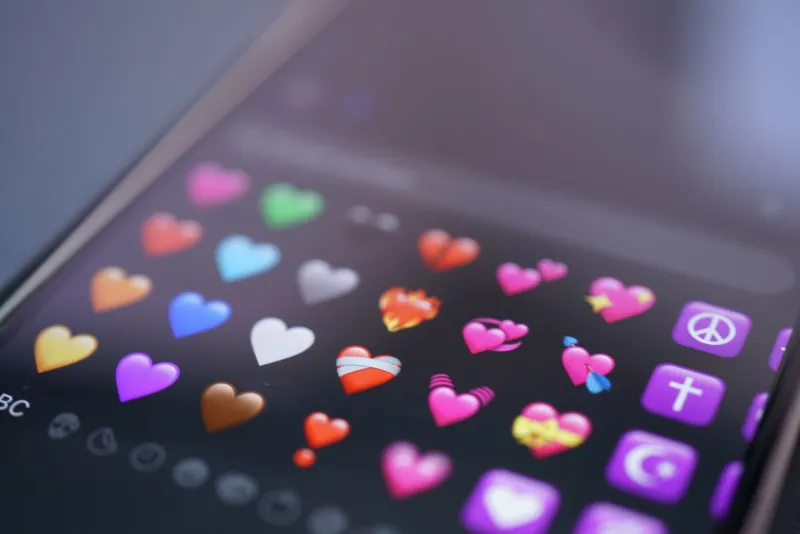
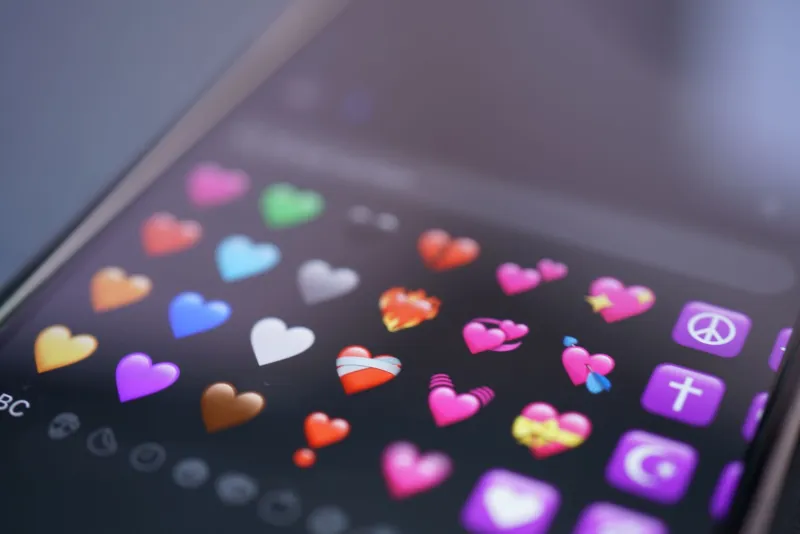
The original Unicode emoji set, introduced in 1999 by Japanese carrier NTT DoCoMo designer Shigetaka Kurita, was never intended for global domination. It was a practical solution for a Japanese mobile market that needed fast, expressive shorthand for text messages. The 176-character set was functional, visually distinct, and — crucially — designed around emotional and contextual use rather than literal representation.
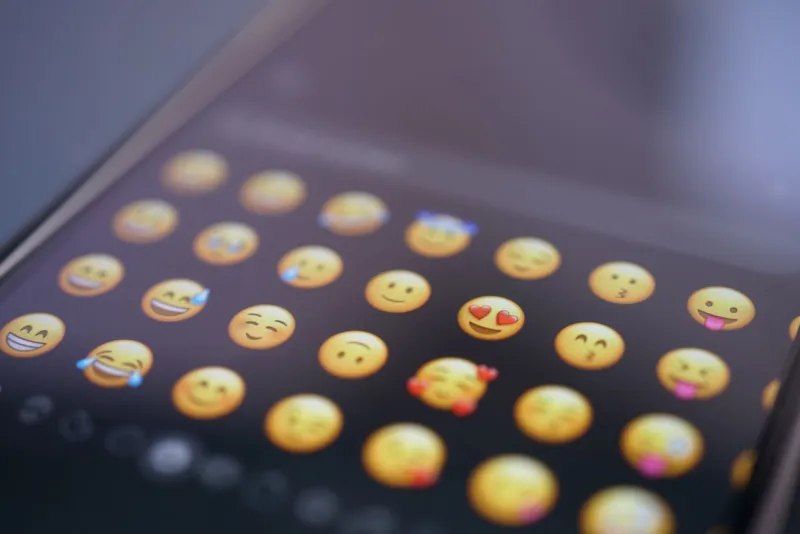
When Apple added emoji support to the iPhone in 2011 for US users (Japan had it in 2008), the reaction was immediate and slightly unhinged. People went emoji-wild in a way that suggested they'd been waiting for exactly this kind of expressiveness without knowing it. The Western internet had been emotionally under-equipped, and suddenly here was an entire visual language ready to fill the gap.
But here's the part that doesn't get talked about enough: the design philosophy behind that language was Japanese. The logic of using a small, stylized image to carry emotional and social weight — rather than just depicting a thing literally — that's deeply embedded in Japanese visual culture, from manga iconography to the deliberate expressiveness of character design. Silicon Valley didn't invent emoji expressiveness. It licensed it.
The K-Pop Fandom Effect
If emoji gave Americans a new vocabulary, K-pop fandom communities turbocharged the adoption of Asian digital aesthetics at a speed that no marketing campaign could have manufactured.
Platforms like Twitter became hotbeds for a specific kind of visual communication style imported wholesale from Korean fan culture: the strategic deployment of certain characters to signal in-group membership, the use of specific emoji combinations as identity markers, the emotionally layered response where a single 🥺 does more work than three paragraphs of explanation.
American Gen Z users absorbed these conventions through sheer cultural osmosis. You didn't need to be a K-pop fan to pick up the habit of ending a sentence with ㅠㅠ — the Korean equivalent of crying eyes — because you'd seen it enough times in comment sections and replies that it started to feel intuitive. That's how deep cultural adoption works. Not through deliberate learning, but through repeated exposure until the borrowed thing starts to feel native.
Context Is the Content
Maybe the most significant philosophical shift here is about what digital expression is actually for.
Western communication defaults — especially in a business or tech context — have traditionally prioritized clarity and literal meaning. Say what you mean. Mean what you say. Emoji, in this framework, are decorative. Accessories. Little pictures you add to a message after the actual content is already there.
Asian digital design philosophy flips this. The emoji, the kaomoji, the specific character choice — these aren't decorating the message. They are the message. Or at least, they're carrying the relational and emotional layer that the words alone can't transmit. The ✨ around a statement isn't sparkle for sparkle's sake. It's a tone marker. It tells you how to read everything else.
This is a genuinely different model of communication, and the fact that it's now standard practice for millions of Americans — especially younger users — represents a quiet but real shift in how a generation understands language itself.
Why This Matters Beyond the Keyboard
You might be wondering why any of this is worth unpacking. It's just texting, right?
Except it's not just texting. The way a generation learns to express emotion digitally shapes how they process and communicate emotion in general. When your primary emotional vocabulary is visual, layered, and context-dependent rather than literal and declarative, that changes things. It changes what you expect from communication. It changes what feels satisfying to send and receive. It changes what "being understood" feels like.
And all of that was seeded by design decisions made in Japan decades ago, filtered through Korean fan communities, and absorbed by American internet culture so gradually that most people can't point to the moment it happened.
That's kind of the point. The best cultural shifts don't announce themselves. They just show up one day, and suddenly the old way of doing things looks like a colon and a parenthesis — functional, technically, but nowhere near enough.