The People Who Decide What Your Face Looks Like Online — And Why Asia Changed Everything
Most Americans have never heard of the Unicode Consortium. That's kind of the point. It's a nonprofit organization tucked away in Mountain View, California, and it makes decisions that affect literally every person on the planet who owns a smartphone. Specifically, it decides which characters — including emoji — get to exist in the digital world.
For a long time, the faces in that digital world looked a lot like one particular kind of person. And a coalition of Asian engineers, designers, and cultural advocates got tired of it.
A Yellow Default Is Still a Default
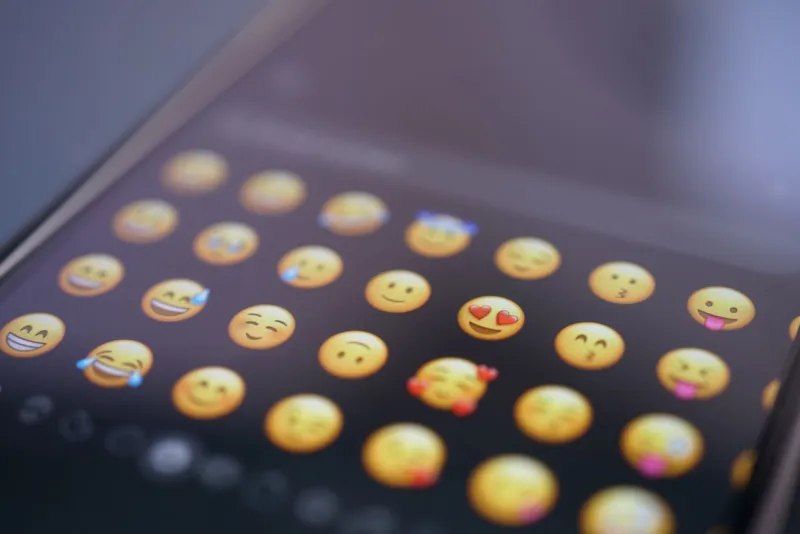
When emoji first crossed over from Japanese carrier networks into the global mainstream around 2010, the little faces were a uniform cartoon yellow. Neutral, supposedly. Universal. Except they weren't, really — that shade of yellow reads differently depending on who's looking at it, and for a lot of people, the "default" human emoji never quite felt like them.
The 2015 Unicode 8.0 update introduced skin tone modifiers for the first time, giving users five additional tones based on the Fitzpatrick scale — a dermatological classification system originally developed by a Harvard doctor in the 1970s. It was a genuine step forward. But the rollout exposed just how complicated "representation" actually is when you're trying to compress the full spectrum of human appearance into a standardized code point.
The Fitzpatrick scale, after all, was designed to measure how skin reacts to UV radiation — not to capture the lived experience of racial or cultural identity. And the moment skin tone options went live, the debates started. Which tone do mixed-race users pick? Why do some combinations look more "finished" than others depending on the platform? Why are certain cultural gestures and garments still missing entirely?
Who Actually Sits in the Room
Here's where the story gets interesting. Unicode isn't a government agency or a tech giant — it's a membership organization, and its emoji subcommittee includes representatives from companies like Google, Apple, Microsoft, and Meta, alongside independent contributors. For years, the dominant voices in those rooms came from a pretty narrow geographic and cultural slice of the tech industry.
That started shifting as Asian tech companies — particularly from Japan, South Korea, and increasingly China — began asserting more influence in the standards process. Japanese carriers had invented emoji culture in the first place, in the late 1990s, and there was a growing sense within Asian design communities that the global emoji canon had drifted away from its origins in ways that felt politically convenient for Western platforms.
Design advocates from Japan pushed for more nuanced representations of East Asian facial features. Korean contributors flagged the absence of culturally specific gestures. Engineers from across the Asia-Pacific region began submitting formal proposals — the actual mechanism through which new emoji get approved — in larger numbers and with more sophisticated documentation.
Submitting a successful emoji proposal is genuinely hard. You need to demonstrate real-world usage, explain why existing emoji don't already cover the concept, and make the case for why this character has enough cross-cultural relevance to earn a permanent Unicode code point. It's a bureaucratic process, but it's also a political one. And Asian contributors got very good at playing it.
The Proposals That Changed the Game
Some of the most consequential emoji expansions of the last decade trace back to Asian-led advocacy. The push for more diverse family structures, more accurate representations of darker skin tones in combination with certain hair types, and the inclusion of disability-related emoji all involved significant contributions from non-Western design teams who understood, from personal experience, what it felt like to be invisible in a digital visual language.
Take something as seemingly simple as hair texture. The curly hair, afro, and red hair emoji additions in 2018 came after years of community pressure — and the behind-the-scenes work involved designers from multiple continents collaborating on proposals that could survive committee scrutiny. Similar dynamics played out around the addition of saris, diya lamps, and other culturally specific objects that had been conspicuously absent from a system that somehow found room for a fax machine.
The disability representation push — which brought wheelchair users, guide dogs, prosthetic limbs, and hearing aids into the emoji set — also had significant Asian advocacy behind it, particularly from Japanese disability rights communities who had long been vocal about the invisibility of disabled people in mainstream digital media.
Why American Users Barely Noticed
Here's the uncomfortable part of this story. Most people in the US experienced all of this as a series of pleasant little updates — oh cool, new emoji — without registering the political and cultural work that made those updates happen. That invisibility is partly by design. Standards bodies aren't exactly known for their PR operations.
But it also reflects something real about how American tech culture tends to absorb Asian digital innovation: enthusiastically, but without attribution. The emoji keyboard on your iPhone is, at its root, a Japanese invention. The diversity of faces now available in that keyboard is, in significant part, the result of Asian advocacy within a system that wasn't originally built with Asian users in mind.
There's a quiet irony in that. The technology that gave emoji to the world — Japanese mobile carriers in the 1990s — also seeded the cultural expectation that digital communication should be expressive, visual, and human. When that expectation collided with a Western-dominated standardization process, something had to give. And it did, slowly, because people showed up to meetings and filed proposals and pushed back.
The Fight Isn't Over
For all the progress, the Unicode emoji set is still a negotiated compromise — and those negotiations continue to reflect power dynamics that don't always favor smaller communities. Proposals from less commercially influential regions still face longer odds. Certain cultural expressions remain untranslatable into the standardized visual grammar that Unicode requires.
And there's a newer front opening up: AI-generated avatars and virtual identity systems are increasingly operating outside the Unicode framework entirely. Platforms like VRChat, Roblox, and a growing number of social apps let users build faces and bodies from scratch, which creates both more freedom and new questions about defaults, representation, and who's setting the baseline.
The engineers who fought to put more faces into the emoji keyboard are already thinking about what comes next. Because the question of which human faces get to exist in digital space — and who decides — isn't going away. It's just moving to a new battlefield.
And if history is any guide, the people most likely to show up and do the unglamorous work of changing the defaults are the ones who've been staring at the wrong defaults the longest.